
Paul Stamets’s Fungal Calling
How to Change Your MindStamets turns an experience of fear and release into a lifelong vocation, then balances practical innovation with an expansive, sometimes untestable worldview.
increasing Bearing strength in each event
 decreasing
Bearing strength in each eventdecreasingA Stutterer Looks Down
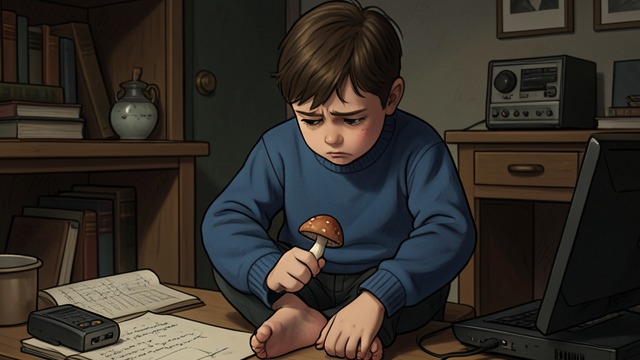
A Childhood of Inhibition
A bodily obstacle
Stamets remembers stuttering as a source of shame and social fear. Looking down, he later jokes, helped him become observant enough to find mushrooms.
A hidden direction
His brother John’s example and the book he leaves behind orient Stamets toward scientific curiosity and unusual states of consciousness.
The Storm Changes Him
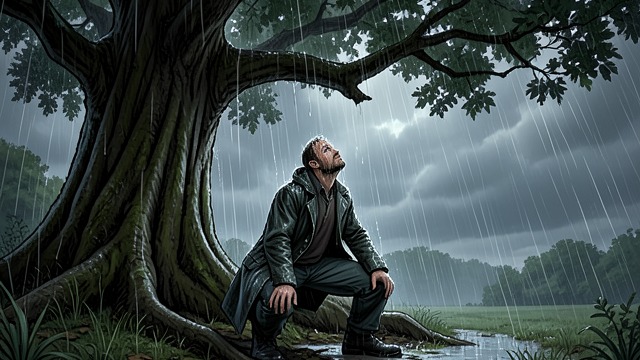
Holding the Oak
Fear in the branches
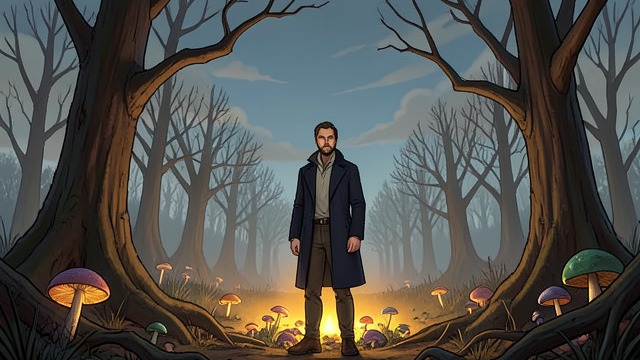
A large mushroom dose, a high tree, and an approaching storm leave Stamets frightened and physically vulnerable. He experiences the oak as a connection between earth and sky.
A remembered breakthrough
His determination to stop stuttering becomes an internal refrain. When he speaks more freely the next morning, he interprets the event as a summons to study mushrooms.
The Self-Taught Mycologist
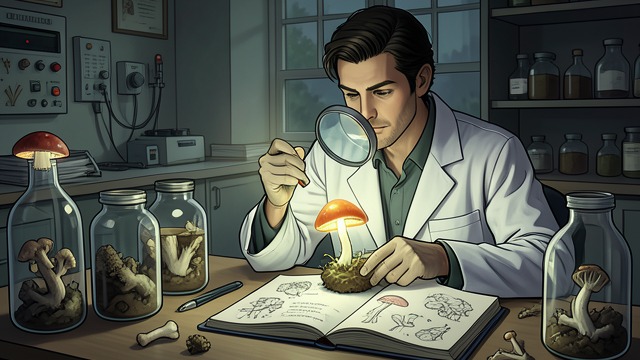
Building a Discipline
Field and laboratory
Stamets studies Psilocybe with colleagues at Evergreen and publishes descriptions of new species. He makes himself an authority through sustained observation and technical practice.
Outside the academy
His independent path gives him freedom to pursue wide questions, while leaving his credentials and claims open to scrutiny. He becomes both respected specialist and outsider.
A Company and a Cause
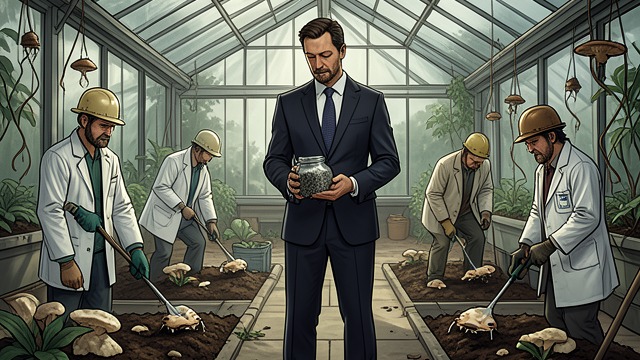
Turning Fungi into Work
Applied mycology
Stamets builds Fungi Perfecti and develops projects involving cultivation, environmental restoration, and fungal products. His work produces practical outcomes as well as public attention.
Advocacy expands
He speaks for fungi as ecological partners and potential problem-solvers. His enthusiasm makes his science accessible, but can blur the line between tested result and visionary forecast.
The Messenger’s Burden
Serving a Mycological Vision
A worldview of connection
Stamets interprets fungal networks as intelligent and sees psilocybin as a message from nature. Pollan recognizes the emotional force of this vision while remaining cautious about its claims.
A productive tension
The book leaves Stamets neither debunked nor endorsed wholesale. His imagination can reveal overlooked relationships, but its most ambitious propositions remain speculative.
During his youth in Ohio
At Kenyon College in 1973
From the mid-1970s onward
From 1984 into the 2000s
During the book’s final fungal reflections
